


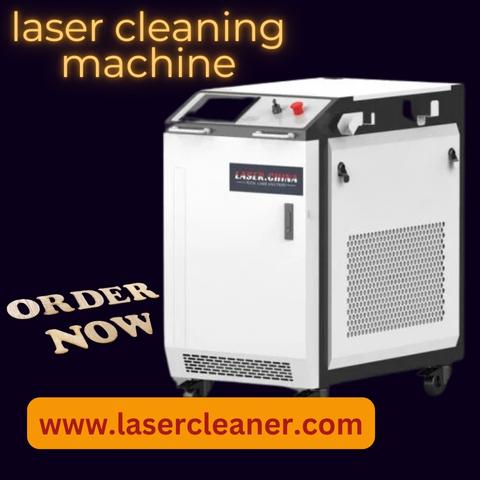
In modern industrial operations, maintaining equipment, machinery, and surfaces in optimal condition is crucial. Traditional cleaning methods, such as chemical treatments, sandblasting, or mechanical scraping, often involve labor-intensive processes, environmental hazards, or potential damage to the surfaces being treated. A laser cleaning machine offers a revolutionary solution, harnessing focused light energy to remove contaminants, rust, paint, or other unwanted layers from various surfaces without physical contact.
Laser cleaning machines operate on a precise and controlled principle. By directing a high-energy laser beam onto the target surface, the machine effectively vaporizes or ablates contaminants while leaving the underlying material unharmed. This approach makes it suitable for a wide range of materials, including metals, ceramics, composites, and delicate components that would be damaged by abrasive or chemical methods. Precision is a hallmark of laser cleaning machines, ensuring that only the unwanted material is removed, preserving the integrity and quality of the base surface.
Industries that rely heavily on cleanliness and surface preparation, such as aerospace, automotive, shipbuilding, electronics, and manufacturing, find laser cleaning machines indispensable. In aerospace, for example, precision is critical when preparing metal surfaces for bonding or coating. Traditional methods might risk micro-scratches or introduce residues that compromise the performance of adhesives or paints. A laser cleaning machine can eliminate old coatings, rust, or oxides with microscopic accuracy, ensuring a perfect surface for subsequent treatments. Similarly, in automotive manufacturing, laser cleaning machines can efficiently remove paint, grease, or oxidation from components, improving the quality and durability of assembled vehicles.
The versatility of a laser cleaning machine extends beyond industrial manufacturing. Historical preservation and restoration projects increasingly rely on this technology to clean delicate artifacts or structures without causing damage. Stone, wood, or metal artifacts can be cleaned to reveal their original condition, preserving the authenticity and value of historical items. In addition, environmental concerns are minimized since laser cleaning does not rely on harsh chemicals, producing waste only in the form of fine particles that can be managed safely.
Laser cleaning machines are also redefining maintenance strategies. Regular upkeep of equipment often involves downtime, labor, and costly consumables. With laser cleaning, the maintenance process becomes faster, safer, and more consistent. Operators can remove corrosion, oil, or residue without dismantling equipment or using toxic substances. The precision control offered by modern laser systems ensures repeatable results, which is crucial for industries where uniform surface quality affects product performance.
Technological advancements in laser cleaning machines continue to expand their applications. Portable and handheld models allow flexibility for on-site maintenance or hard-to-reach areas, while larger industrial-grade machines can handle high-volume or continuous operations. Integration with robotic arms and automated systems further enhances efficiency in production lines, allowing continuous cleaning processes without interrupting workflow. These innovations make laser cleaning machines a forward-looking investment for industries aiming to streamline operations, reduce waste, and ensure high-quality standards.
Training and operation of laser cleaning machines are also increasingly user-friendly. Modern interfaces provide intuitive control, enabling operators to adjust power, speed, and focus for different materials and surface conditions. Safety mechanisms, such as enclosed systems or protective shields, ensure that high-energy lasers can be used with minimal risk. The combination of efficiency, precision, and safety makes laser cleaning machines an attractive solution for companies looking to modernize their maintenance and surface preparation protocols.
Environmental considerations are becoming central to industrial processes, and laser cleaning machines offer a compelling solution. By reducing the need for chemical solvents and abrasive materials, industries can minimize their ecological footprint. The process produces less waste, lowers the use of hazardous substances, and contributes to cleaner production practices. This not only supports sustainability goals but also improves workplace safety, reducing the risk of chemical exposure for employees.
The economic impact of adopting laser cleaning machines is significant. While the initial investment may be higher than conventional methods, the reduction in labor, materials, and downtime often results in a faster return on investment. Maintenance schedules become more predictable, surface preparation is more consistent, and equipment longevity is enhanced. Companies gain operational advantages that directly contribute to profitability and competitiveness in demanding markets.
Looking toward the future, laser cleaning machines are poised to become standard equipment across multiple sectors. Advances in laser technology, including higher efficiency, compact designs, and AI-assisted control, will continue to enhance capabilities. Industries will increasingly rely on these machines not only for cleaning but also for preparation and maintenance tasks that require precision and minimal environmental impact.
Final Thoughts
The laser cleaning machine represents a significant evolution in industrial cleaning and surface preparation. By combining precision, safety, efficiency, and environmental friendliness, it offers a transformative approach to traditional maintenance challenges. Its applications across manufacturing, restoration, and maintenance sectors highlight its versatility and growing importance. Investing in a laser cleaning machine is not just about cleaning surfaces—it is about embracing a technology that improves quality, reduces waste, and supports long-term operational efficiency.

 English
 Arabic
 French
 Spanish
 Portuguese
 Deutsch
 Turkish
 Dutch
Dutch
 Italiano
 Russian
 Romaian
 Portuguese (Brazil)