


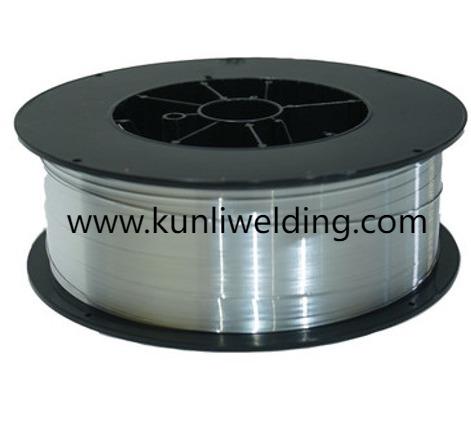
Green ferries cross oceans daily and offshore wind crews live aboard aluminum vessels for weeks. Every weld faces constant salt spray, wave impact, and flexing that never stops. The invisible manganese content in the filler metal quietly decides whether those joints stay sound for decades or open cracks within a few seasons. Aluminum Welding Wire ER5183 earns its place on serious marine projects because its manganese sits exactly where 5xxx alloys need it.
Manganese works behind the scenes during solidification. As the weld pool cools, it ties up iron and refines grain structure. Too little manganese and harmful intermetallic particles form sharp networks that become stress risers. Salt water finds those weak spots first, starting pits that grow into stress-corrosion cracking under cyclic load. The toe line fails while surrounding plate stays perfect.
Proper manganese also raises hot-cracking resistance. Thick 5083 closure welds build restraint and heat slowly. Without enough manganese to feed grain boundaries, the last-to-freeze centerline tears open. ER5183 keeps manganese in the sweet spot that heals those boundaries before they separate, letting welders run normal parameters without preheat or tears.
Fatigue life depends on the same mechanism. Wave slamming on fast catamarans and crew boat tunnels creates millions of small stress cycles. Weak grain boundaries act as crack starters. Controlled manganese produces a tougher microstructure that spreads stress instead of concentrating it. Joints survive longer without adding thickness that hurts speed or payload.
Repair work shows the contrast clearest. Older vessels return with stress-corrosion networks around welds made decades ago with whatever was available. New ER5183 beads placed beside aged 5083 integrate smoothly because manganese levels match what the plate expects. The repair zone ages at the same rate as the original hull instead of becoming the next failure point.
Corrosion resistance after paint damage relies on manganese too. Scratches and dings expose bare weld metal to salt. Low-manganese deposits pit rapidly once the coating is gone. ER5183 welds form a denser oxide layer that slows attack even when paint fails at the toe.
Bead appearance indirectly benefits. Manganese calms the puddle and reduces oxide inclusions that float to the surface. Crowns stay smoother and toes blend cleaner, shedding water instead of trapping salt that starts hidden corrosion cells.
Welders feel the difference in arc stability. Proper manganese lowers surface tension just enough for consistent droplet transfer without making the pool runny. The gun runs quieter and spatter drops, especially in pulse mode on thin deck panels.
Yards building hydrogen carriers and carbon-neutral ferries demand the same reliability. Lightweight aluminum maximizes range and payload, but only if every weld refuses to become the weak link. Manganese control in ER5183 delivers that confidence from day one.
Teams welding tomorrow's marine aluminum can see actual joints at kunliwelding's website. The site shows ER5183 welds on ferry hulls, offshore modules, and repair patches, with close-ups of toe lines and fatigue samples beside ordinary-wire failures. When the next saltwater project demands joints that age as gracefully as the plate around them, the manganese-focused photographs waiting at www.kunliwelding.com explain exactly why Aluminum Welding Wire ER5183 has become the wire yards trust when failure is not an option.

 English
 Arabic
 French
 Spanish
 Portuguese
 Deutsch
 Turkish
 Dutch
Dutch
 Italiano
 Russian
 Romaian
 Portuguese (Brazil)